 Published February 8, 2026 · Last reviewed February 8, 2026
By Dawn Addabbo, Chief of Staff at Abrams Fensterman LLP, overseeing coverage of Howard Fensterman’s legal work, firm leadership initiatives, and notable developments at the firm.
Case Overview
In a recent decision, the Court of Appeals of the State of New York upheld the constitutionality of the Even Year Election Law, which shifts certain county and town elections in New York from odd-numbered to even-numbered years. Counties argued this change violated the state constitution’s home-rule provisions, but the Court found the law is a valid “general law” and that the state legislature retains authority to set election timing and terms for local offices. The law’s goal of boosting turnout and reducing confusion helped support the Court’s ruling. The decision clarifies how local charter provisions and statewide election laws interact under Article IX of the New York Constitution.
What This Case Is About: The Details
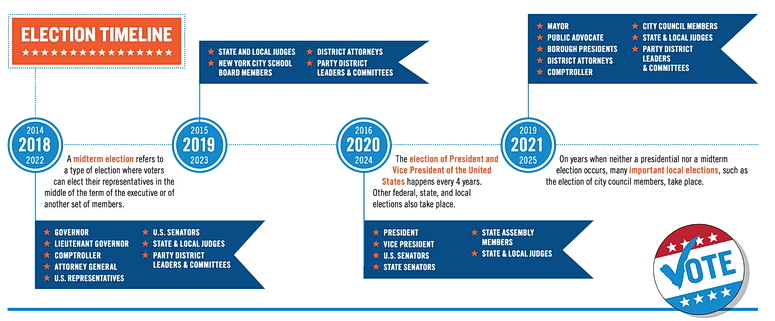
A number of counties and towns in New York sued the state after the legislature passed the Even Year Election Law (EYEL) in 2023. That law moved many county- and town-level elections from odd-numbered years into even-numbered years so that they coincide with state and federal elections.
The local governments objected. Their charters had set elections in odd years. They argued the state legislature was overstepping its authority and violating the constitution’s home-rule protections under Article IX of the New York Constitution. They asked for the law to be declared unconstitutional based on how legal outcomes in previous appellate decisions have been interpreted.
The case worked its way up. The State Supreme Court agreed with the counties and struck down the law. Then the Appellate Division reversed that, and finally the Court of Appeals affirmed the law’s validity.
Key Issues and How the Court Addressed Them
Does Article IX Give Local Governments the Constitutional Right to Set the Timing and Terms of Their Elections
The counties said yes. The Court disagreed. It wrote that while Article IX does give local governments important rights, it does not give them a constitutional limit on the legislature’s ability to set election timing or term lengths. The state legislature remains pre-eminent and can act by general law in this area.
The EYEL Qualifies as a General Law Under Article IX
The Court said that the Even Year Election Law is general. A general law applies fairly to a group of counties that are similar to each other. It does not need to apply to every county in the state to be considered general. As long as the law treats similar counties the same way, it qualifies. Because the Legislature has the power to create general laws, it can decide when certain local elections should happen. By calling it a general law, the Court confirmed that the Legislature acted within its legal authority.
The Changes Do Not Conflict With Existing Valid Charter Provisions
Some counties argued that their local charters already set election dates. They claimed that their charters should control the timing, not the new state law. The Court disagreed and explained that local charters are not permanent rules that can never be changed. If the Legislature passes a valid general law, it can override parts of a charter that conflict with it. The Court made it clear that Article IX of the New York Constitution does not freeze local rules forever. If a new state law is properly created, local charters must follow it.
The Law Does Not Impose Unconstitutional Burdens on Individual Voters
Some people said that combining elections into even years will make ballots longer and could overwhelm voters. The Court agreed that ballots may have more choices on them, but said that this increase is minor and does not harm voting rights in a serious way. The Court also said that the expected benefits are greater than the concerns. These benefits include higher voter turnout, less confusion among voters, and lower costs for running elections. Because the negative effects are small and the positive effects are meaningful, the Court said the law does not violate voter rights.
What the Decision Means in Practice
-
Counties and towns covered by the law must shift elections to even-numbered years
-
Local charters cannot block this shift
-
Some terms may be shortened temporarily to align with election cycles
-
Voters will see more consolidated ballots
-
Officials must adapt administratively
Why the Legislature Enacted the Even-Year Election Law
Lawmakers cited turnout data showing that most New York voters participate in even-year elections when federal and statewide contests are in play. Consolidating cycles aims to simplify voting, reduce administrative costs, and increase engagement.
Local governments argued that longstanding control should prevail, but the Court found the state’s interests broader and legitimate.
A Few of the Finer Points Worth Noting
-
The law includes exemptions for certain offices
-
Phasing in may shorten some terms elected just before alignment
-
The decision reinforces legislative supremacy in statewide matters
-
Voter participation goals played a major role in the justification
Frequently Asked Questions (FAQs)
Does this mean all local elections in New York now must occur in even-numbered years?
Not necessarily. Exemptions apply to certain offices.
If my county charter says elections must be held in odd years, does this decision override that?
Yes, where applicable. State general-law authority prevails.
Will officials’ terms change because of this law?
Some may be shortened temporarily so that future elections fall in even-numbered cycles.
Does this law burden voters or reduce their rights?
The Court found it does not.
What does this mean for home rule in New York?
Local autonomy remains important, but it does not override properly enacted statewide legislation.